What is cataract?
A cataract is a clouding of the eye’s natural lens (the clear structure behind the pupil) that makes vision dull, blurry or misty and often causes glare or difficulty with night driving. It is a very common cause of reduced vision as people grow older.
Causes of cataract:
Age
Medical problems, such as Diabetes
Injury to the Eye
Medications, especially steroids
Radiation
Previous eye surgery
Unknown factors

Symptoms to watch for:
Blurred or hazy vision
Colours looking faded or yellowed
Glare or halos around lights, especially at night
Needing brighter light to read
Frequent changes in spectacle prescription
How are cataracts treated?
If vision is only mildly affected, stronger glasses, brighter lighting, or anti-glare lenses may help for a while. When everyday activities (reading, driving, working) are limited by vision, the only effective treatment is surgical removal of the cloudy lens and replacement with an artificial intraocular lens (IOL). Cataract surgery (most commonly phacoemulsification) is usually done as a day-case and is very safe and effective.
SURGERY OPTIONS:
MICS (Micro incision cataract surgery)
Micro incision cataract surgery (MICS) is an advanced approach to cataract surgery by phacoemulsification through incision less than 2.2 mm with the purpose of reducing surgical invasiveness, improving at the same time surgical outcomes. Suture less surgery, smaller incisions means faster healing time and better visual rehabilitation. Does not require sutures for incision closure.
Phacoemulsification
Phacoemulsification is a modern cataract surgery in which the cataract is emulsified (broken down in to small pieces) with an ultrasonic (high frequency sound waves) hand piece and sucked out from the eye through incision around 2.8 mm. Does not require sutures for incision closure
SICS (Small incision Cataract Surgery)
In Manual small incision cataract surgery cataract is extracted from the eye through incision around 4 mm to 6 mm. Recovery time in this surgery is more as compared to Phaco surgery. Suture May be required
TECHNOLOGY
At Urmi, we have always been at the forefront of embracing new technologies which increase our accuracy and precision, improve safety, or enhance patient comfort. Let’s take a closer look at some of the sophisticated equipment in our armamentarium.
Once cataract is diagnosed, pre-operative tests and evaluation are done to calculate the power as well as determine the appropriate type of the lens to be implanted. This technology of using the appropriate IOL based on individual eye parameters is referred to as Customized Cataract Surgery.
Giving you the Right power of the lens
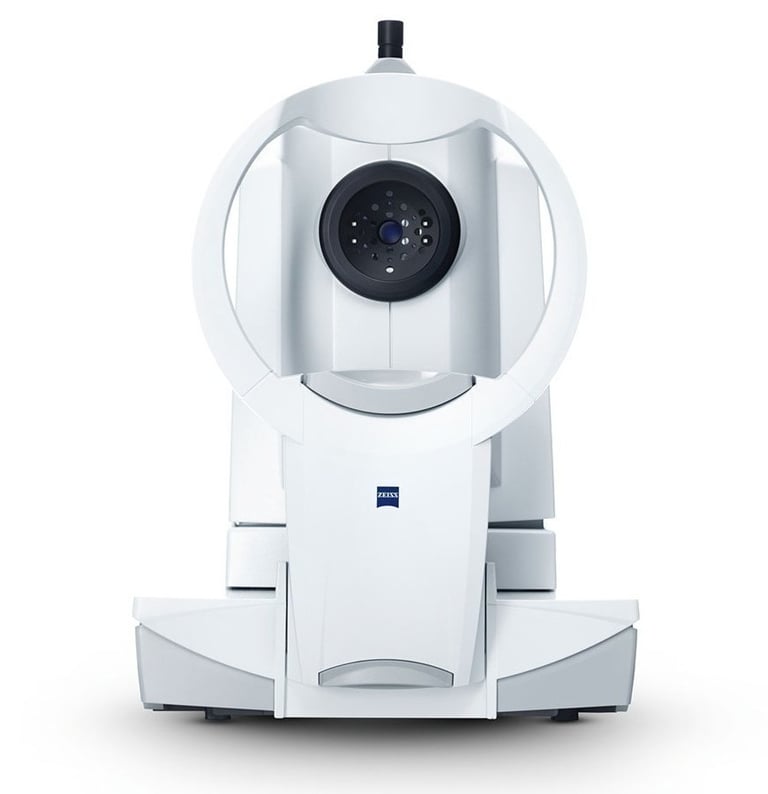
Biometry (IOL power calculation) is the most important pre-operative investigation since it calculates the power of the IOL which is to be implanted in the eye. The IOL master 700 is a versatile machine and the top of its class and the most accurate of all the bio meters available today. It utilizes the state of the art swept source OCT technology to pinpoint the ocular parameters to an accuracy measured in microns. At Urmi, we have made this perfect performer available for your service, the first installation to be done in the whole of Kalyan, Ambernath , Ulhasnagar , Raigad districts. All the measurements are done by trained personnel and every effort is made to ensure accurate results
· The IOL Master® 700 is the gold standard in optical biometry with more than 100 million successful IOL power calculations to date.
· In denser cataracts the IOL Master 700 achieves a measurement success ratio that is up to 95% higher than that of other optical biometry devices.
EVERY EYE IS UNIQUE SO SHOULD BE ITS CATARACT SURGERY!
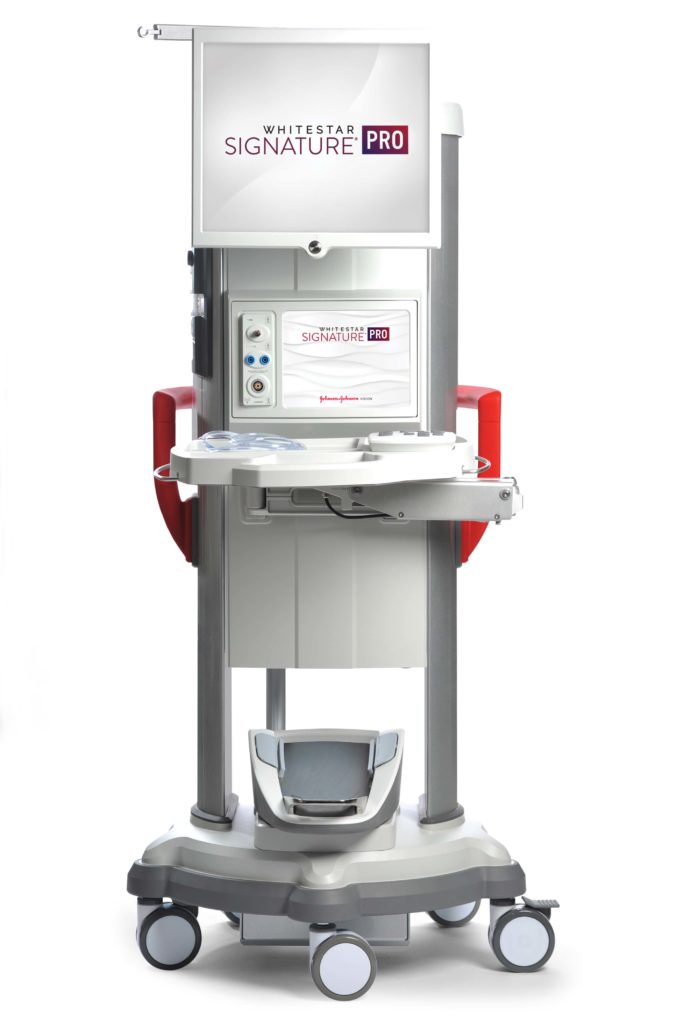
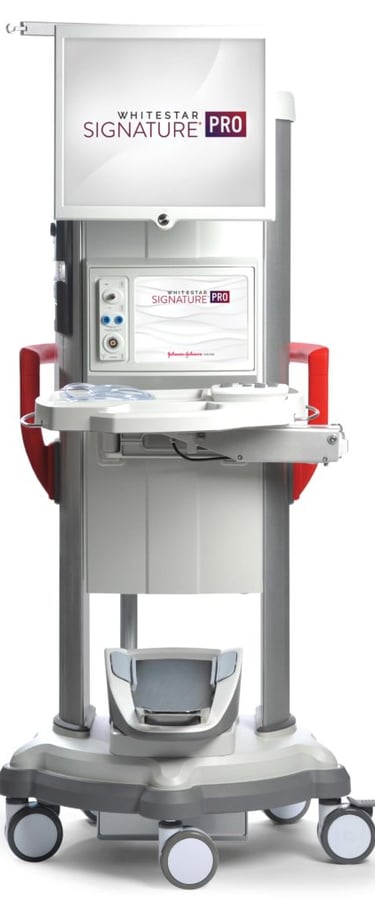
Phaco surgery redefined with the most advanced WHITESTAR SIGNATURE PRO™ Phacoemulsificaton system & SOVEREIGN COMPACT PHACOEMUSIFICATION WITH ELLIPS FX TECHNOLOGY, the original machine which pioneered the cold phaco technology, along with the revolutionary ELLIPS technology, which makes the phaco tip rotate on an elliptical path to effortlessly emulsify the cataract. A truly customized cataract surgical experience.
• Increased Safety
a) Reduced heat production in the eye.
b) Unique fluid management system avoids cross contamination & safeguards against infection. Minimal or no damage to ocular tissues due to reduced fluid flow & turbulence.
• Early Visual Rehabilitation
a) Reading & TV viewing – easily done with proper precautions from second day.
b) Resume work from the next day.
• Enhanced Efficiency
a) ELLIPS Technology (elliptical) ensures safer & faster cataract removal even for the hardest (brown & black) cataracts, than conventional (longitudinal) phaco surgery.
• Micro-coaxial cataract surgery (Phaco 2.2mm surgery)
a) Made possible with the advanced fluidics, ELLIPS, cold phaco technology, ICE and CASE technology, all blended together in a wonderfully efficient micro-coaxial system.
Cold Phaco System
We have TWO of the latest phaco machines WHITESTAR SIGNATURE PRO™ Phacoemulsification system & SOVEREIGN COMPACT WHITE Star —COLD PHACO.WITH ELLIPS Fx Technology. Normally heat is generated during phaco surgery due to high intensity ultrasonic waves which causes microscopic damage to the surrounding structures of the eyeball. This is prevented by cold phaco method.
Our Centre is accredited for implantation of the latest premium IOL like Trifocal, EDOF and Toric Enhanced Monofocal Lenses. All the surgeries are done by suture less method. We have the unique Cold Phaco System. This will prevent microscopic damage to the intraocular structure which is common during Conventional Phaco Surgeries.
Why phaco ?
1 .Small Incision. Better predictability in the post-operative visual status and end refraction
2. Early surgery can be done, so that patient need not wait for the cataract to mature
3 .No sutures and hence no need of suture removal. No injection no eye pad topical anesthesia
4. No irritation, no watering
5 .Early return to work
6. No need to continue drops for a long time
7 .No need for hospital stay, Even if the patient stays, it is only for a short time
8. Stable refraction after two weeks
How to choose correct IOL?
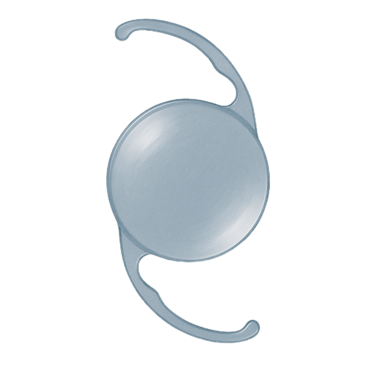
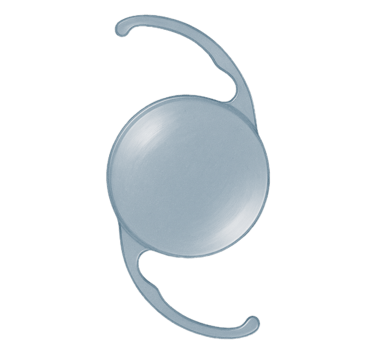
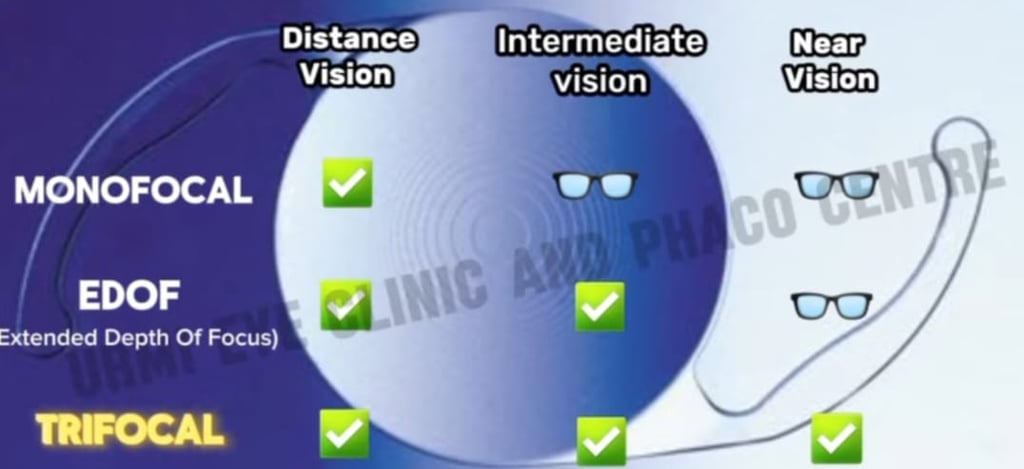
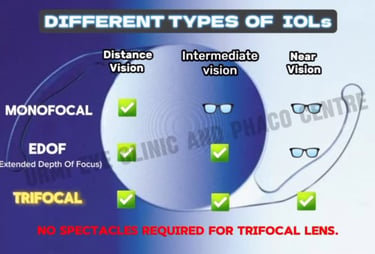
Most of the IOLs implanted today are monofocals, that is they can focus light rays to a single focus point and are calculated to help the patient see distant objects clearly and patient needs glasses for reading.
There are advanced technology lenses available to help patients with astigmatism see better. Multifocal IOLs can help patients to see both distant as well as near objects clearly
Monofocal Aspheric IOLs
These IOLs are designed to focus for the distance vision while giving the best possible vision for distance amongst all platforms of lenses. However these lenses do not correct for intermediate and near vision. So patients opting for these lenses have to use correcting spectacles while looking at intermediate or near objects. Patients who desire independence from spectacles should opt for TRIFOCAL or EDOF IOL
Trifocal IOLs
Trifocal lenses are specially designed with a multiple concentric zones on a single lens. These zones bring into focus, light from both near, intermediate and distant objects. These advanced technology vision enhancing IOL help in decreasing the need to use glasses for most daily activities. Patients opting for these lenses often report a high degree of satisfaction for visibility at all distances. Some patients may reports haloes or glare around lights at night.
EDOF IOLs
Extended depth of focus iols are an new emerging technology lenses which provide high quality distance and intermediate vision with good near vision when binocularly implanted. These lenses are primarily recommended for people who have significant screen use, driving, and a desire to be free from spectacles. These lenses are also reported to have a significantly lower incidence of the problems of glare and haloes which are associated with trifocal iols.
Toric IOLs
Some patients may have an pre existing abnormally curved cornea, a condition known as astigmatism, where one angle or axis usually has more curvature than the other parts of the cornea. This result in an improperly focused image which can be corrected with special lenses which have a additional compensatory curvature which reduces the effect of the corneal astigmatism. Toric iols are available in all IOL platforms namely, monofocal toric, trifocal toric, EDOF toric lenses.

Frequently Asked Questions.
Our Expert Team
At Urmi Eye Clinic & Phaco Centre, our team of experienced ophthalmologists is dedicated to providing comprehensive, ethical, and compassionate eye care using advanced technology and evidence-based treatment. Together, we strive to preserve and restore vision while ensuring every patient receives personalized attention and the highest standard of care.


Dr. Sonali Warade.(MS)

